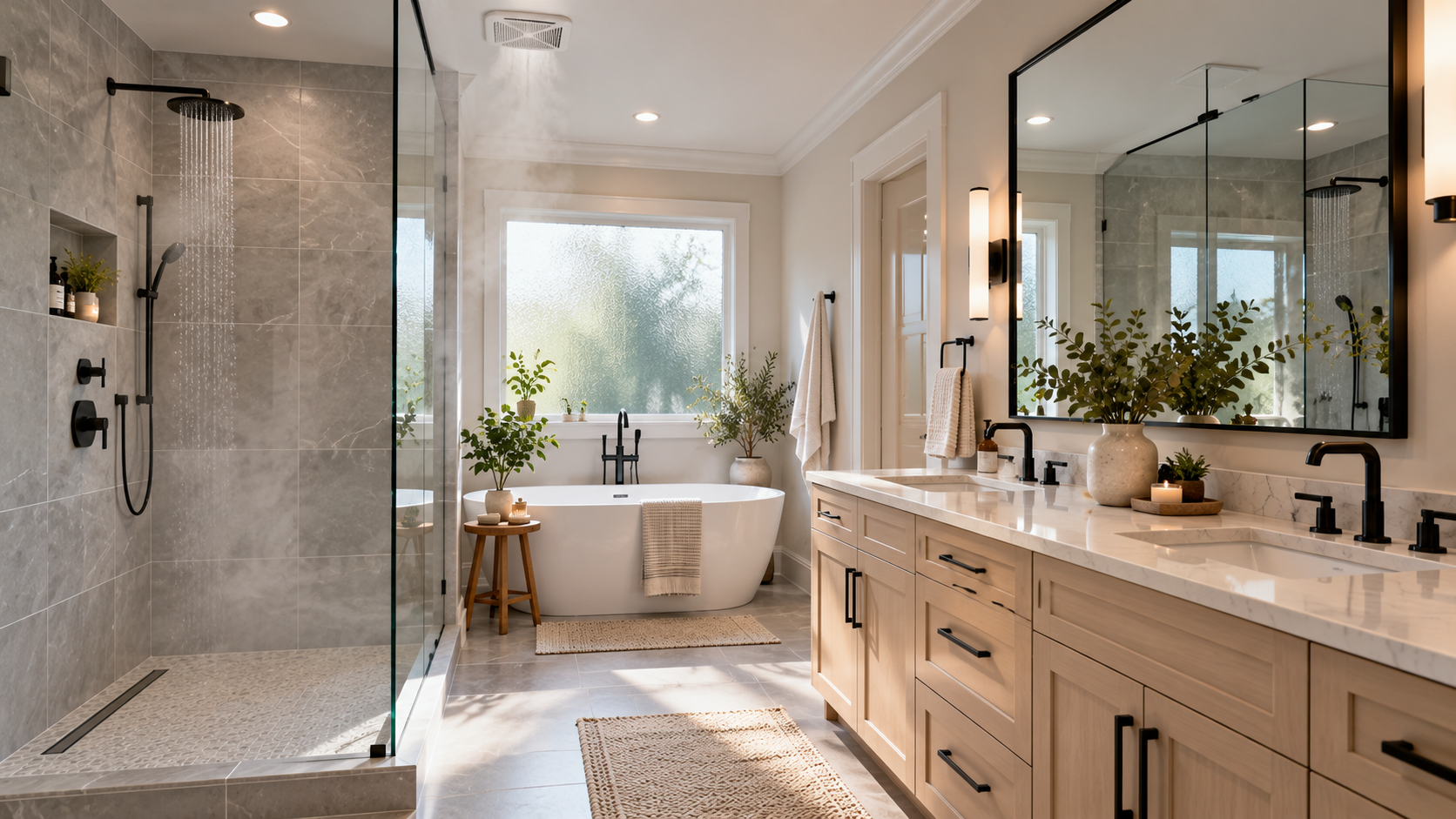
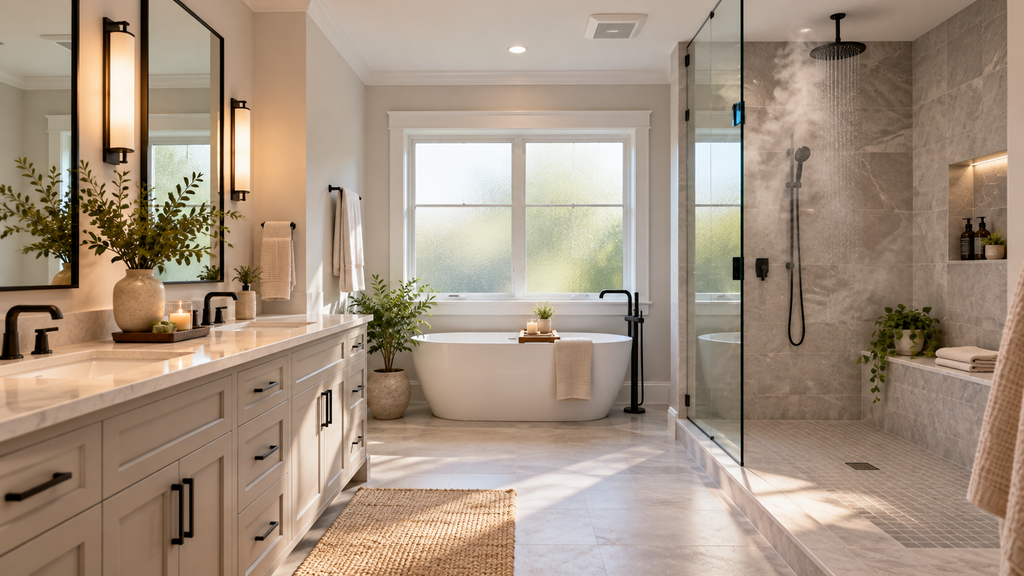
A newly remodeled bathroom with a large tiled shower, a soaking tub, and a tighter building envelope produces more trapped moisture than the old bathroom it replaced. In Huntingdon Valley, Abington, and the surrounding Montgomery County suburbs, cold winters make the problem worse: warm, humid air condenses on windows, mirrors, ceilings, and inside wall cavities.
Peeling ceiling paint, black spots in grout lines, and musty odors a year after a remodel are usually not caused by the tile. They are caused by an undersized exhaust fan or a fan that vents into the attic instead of outdoors.
1. Sizing the Fan Correctly
- Small to Mid-Size Bathrooms: A common industry guideline is about 1 CFM (cubic foot per minute) per square foot of floor area for bathrooms up to 100 square feet, with a minimum of 50 CFM.
- Larger Bathrooms: For larger primary suites, fans are often sized by fixture: roughly 50 CFM each for the toilet, shower, and bathtub, and 100 CFM for a jetted tub.
- Separate Shower or Toilet Rooms: An enclosed shower or water closet may need its own fan, rated for wet locations if installed above the shower.
2. Venting: Where the Air Must Go
Exhaust Duct Installation Checklist:
- Terminate Outdoors: The duct must end at an exterior wall or roof cap with a damper, never in the attic, soffit cavity, or a wall bay.
- Keep the Run Short and Smooth: Use rigid or semi-rigid duct, minimize elbows, and follow the fan manufacturer’s limits on total duct length.
- Insulate in Cold Spaces: Ducts that pass through unheated attics should be insulated to prevent condensation from dripping back into the fan housing.
- Slope Away from the Fan: Where possible, pitch the duct slightly toward the exterior termination so any condensation drains outward.
3. Controls That Make Fans Work
The best fan is useless if it is switched off right after a shower. Humidity-sensing switches, timer switches, and quiet fans (rated around 1.0 sone or less) encourage proper use. Many homeowners pair the fan with a timer that keeps it running 20 minutes after the shower ends.
4. Pennsylvania Code Requirements
Mechanical exhaust in bathrooms is governed by the building codes adopted under the Pennsylvania Uniform Construction Code. Local municipalities enforce these requirements during permit inspections, so venting should be planned during the design phase.
Proper ventilation protects your investment long after the remodel is finished. Explore our kitchen and bath remodeling services to plan a bathroom remodel with Huntingdon Valley Kitchen & Bath Re-modelers.