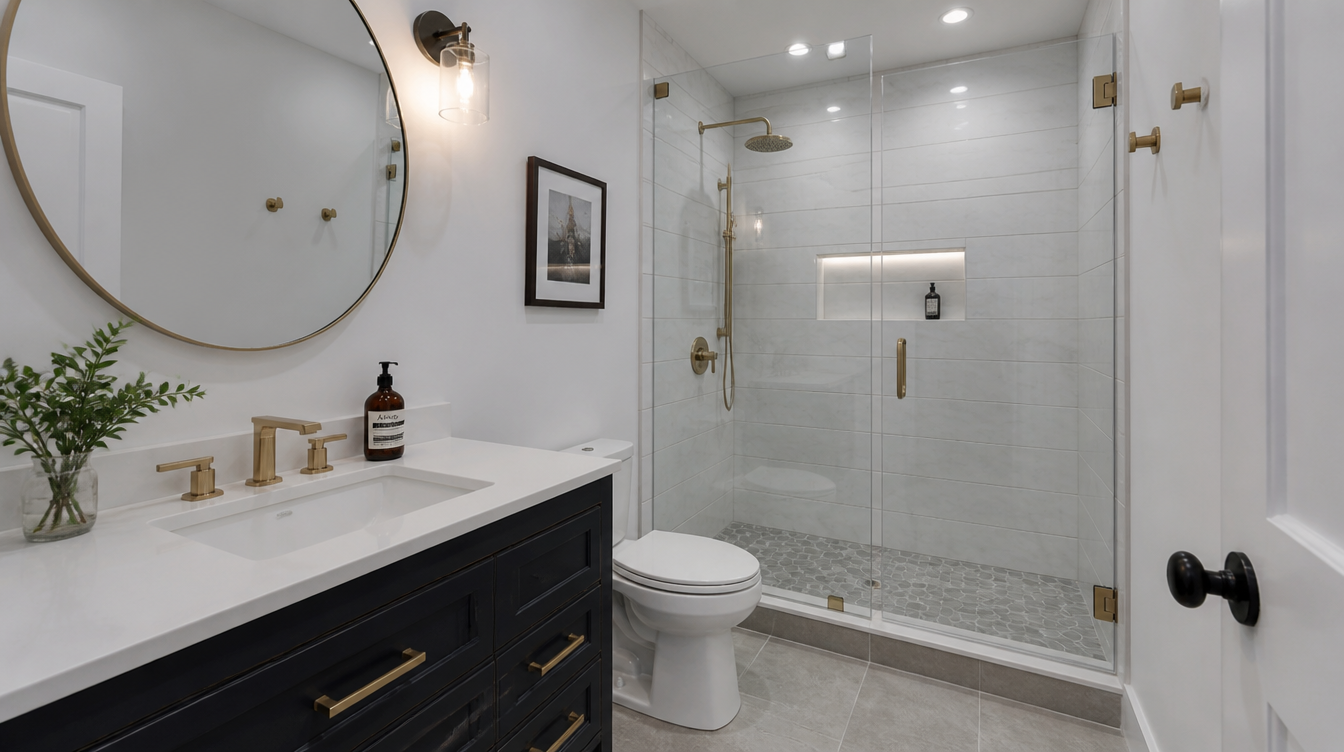
Aging-in-place design works best when it is integrated before mobility becomes an urgent daily problem. A bathroom can remain elegant while quietly improving access, lighting, storage, and future support options.
Read the Problem Before Choosing the Material
Huntingdon Valley and Abington homes often have enough bathroom area to improve circulation without making the space feel institutional.
Local Construction Adds These Constraints
Review doorway width, shower entry, floor traction, fixture spacing, reachable storage, lighting, valve position, and wall locations where future grab bars or seats may be useful.
Coordinate These Items Before Installation
Install backing while walls are open even if support hardware will be added later. Low-threshold or curbless concepts also require deliberate floor, drainage, waterproofing, and glass planning.
The Practical Standard for a Better Result
Lever handles, handheld shower controls, layered light, durable surfaces, and comfortable storage benefit many users. Good universal design should look like good design, not a retrofit.
Frequently Asked Questions
Do I need grab bars now?
Not necessarily. Wall backing can be installed during renovation so future hardware has secure attachment points.
Is a curbless shower always possible?
No. Structure, drain routing, waterproofing, and finished elevations can limit feasibility.
Can an accessible bathroom still look high-end?
Yes. Safety and usability can be integrated into custom tile, cabinetry, lighting, and fixture selections.
Plan the Next Step
Huntingdon Valley Kitchen & Bath Remodelers can plan a bathroom around current comfort and future flexibility without giving up design quality.
Helpful source: New Jersey DCA – Current Construction Codes