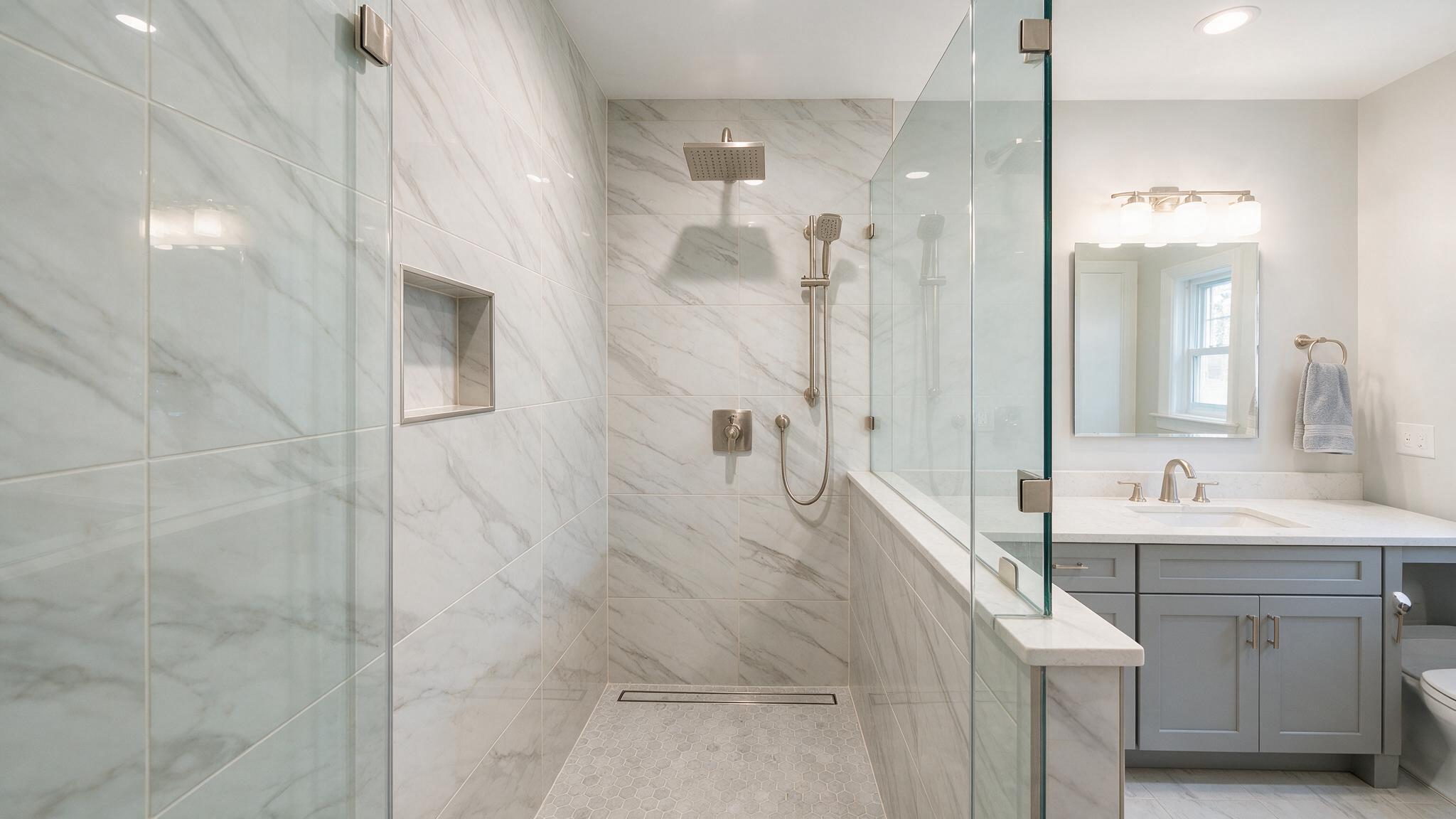
Renovating a primary suite or hall bathroom is one of the most rewarding investments a homeowner can make in Huntingdon Valley, Abington, or Jenkintown. While decorative porcelain tile, frameless glass shower doors, and designer fixtures capture immediate visual attention, the longevity of your new bathroom relies entirely on what lies concealed beneath the surface. A common misconception among homeowners is that ceramic and porcelain tiles, combined with grouted joints, create a waterproof barrier. In reality, tile and traditional cement grouts are water-resistant materials; without a continuous, engineered waterproofing assembly beneath them, moisture will eventually migrate into your home’s structural framing.
Why Surface Finishes Alone Cannot Stop Moisture Infiltration
Moisture is persistent in residential bathrooms. During a standard shower, water vapor and standing liquid continuously press against vertical wall tiles and horizontal floor joints. Over time, microscopic cracks develop in traditional grout lines due to normal house settling or seasonal expansion.
When water bypasses the tile surface, it encounters the substrate board. If tile was installed over standard drywall or basic moisture-resistant green board without an impermeable waterproof membrane, the gypsum core absorbs moisture like a sponge. Saturated wallboard loses its structural strength, causing tiles to loosen and detach while creating a damp enclosed wall cavity that promotes structural timber decay and biological growth. Adhering to EPA moisture control and mold prevention guidelines, controlling liquid water and vapor penetration at the shower envelope is the primary requirement for maintaining indoor air quality and structural integrity.
Anatomy of a Modern Shower Waterproofing Assembly
Constructing a leak-free shower requires installing an integrated waterproofing system that directs all bulk water and moisture vapor into the plumbing drain. Professional remodeling contractors evaluate several critical zones during installation:
- The Shower Pan and Base Slope: Whether constructing a traditional sloped mortar bed or installing a prefabricated pre-sloped foam shower tray, the floor must maintain a precise pitch of one-quarter inch per foot toward the drain. Incorrect slope allows water to pool on the shower floor, degrading grout sealants and causing discoloration.
- Impermeable Sheet and Liquid Membranes: Modern waterproofing utilizes pliable sheet membranes (such as polyethylene fabric vapor retarders) or multi-coat elastomeric liquid membranes applied directly over cement fiberboard. These materials create an unbroken barrier from the shower floor up to the ceiling height.
- Sealed Corners, Seams, and Penetrations: Water actively seeks out ninety-degree room corners and plumbing valve cutouts. Contractors apply specialized waterproofing bands, pre-formed internal corner pieces, and rubber pipe seals around shower mixing valves and showerhead stub-outs to seal the most vulnerable points of the enclosure.
- The Curb and Entry Transition: Where the shower pan meets the main bathroom floor, the waterproof membrane must wrap completely over the shower curb or extend seamlessly across the room floor for curbless zero-entry designs, preventing capillary water wicking into adjacent wooden subfloors.
Waterproofing Custom Niches, Benches, and Windows
Modern custom showers frequently incorporate built-in features such as recessed shampoo niches, floating shaving benches, or existing exterior windows located within the wet zone. Each of these architectural additions introduces horizontal ledges and structural framing cuts that require specialized waterproofing attention.
Recessed shampoo niches must be framed with a slight forward horizontal tilt—typically one-sixteenth of an inch—to ensure that water shedding off bottles drains into the shower rather than pooling at the back of the niche. When an exterior window falls within a shower enclosure, the window jambs and sill must be completely wrapped in waterproof membrane and finished with pitched stone or tile sills that prevent moisture from infiltrating the exterior wall cavity.
Coordinating Framing, Plumbing, and Waterproofing Before Tiling
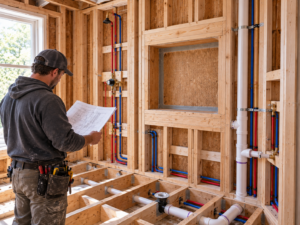
A successful waterproofing installation requires seamless coordination between carpentry, plumbing, and tile-setting workflows. During the initial framing phase, your contractor must inspect existing wooden subfloors and wall studs for historical water damage or mold, replacing compromised timber before installing cement board underlayments.
Plumbing drain flanges and mixing valves must be positioned precisely to align with finished tile thicknesses and membrane bonding layers. By relying on experienced professionals for bathroom remodeling in Huntingdon Valley, you ensure that every underlying waterproofing detail is executed with precision craftsmanship. Whether you are upgrading a hall bath or planning an expansive custom shower remodeling project, our team builds moisture-safe, structurally sound bathrooms engineered to last.
Is ceramic or porcelain tile waterproof on its own? While glazed porcelain and ceramic tiles are impervious to water absorption, the cement grout lines between them and the structural expansion seams in corners are porous. Water will penetrate these joints over time, requiring a dedicated waterproof membrane beneath the tile.
What is the difference between green board drywall and cement board in a shower? Green board is standard gypsum drywall covered with a water-resistant paper facing; it is suitable for bathroom walls outside the shower but will fail if saturated. Cement fiberboard is made of cement and reinforcing fibers, remaining structurally stable even when repeatedly exposed to moisture.
Why do shower floor grout lines turn dark or crack over time? Dark or cracking floor grout is typically caused by an improperly sloped shower pan that allows standing water to pool beneath the tile, or by structural subfloor flexing that breaks the rigid grout joints.
How does bathroom exhaust ventilation protect waterproofing and finishes? High-efficiency exhaust fans remove airborne moisture vapor during showers before it can condense on painted ceilings, penetrate drywall outside the waterproofing envelope, or promote mildew growth on silicone expansion joint sealants.