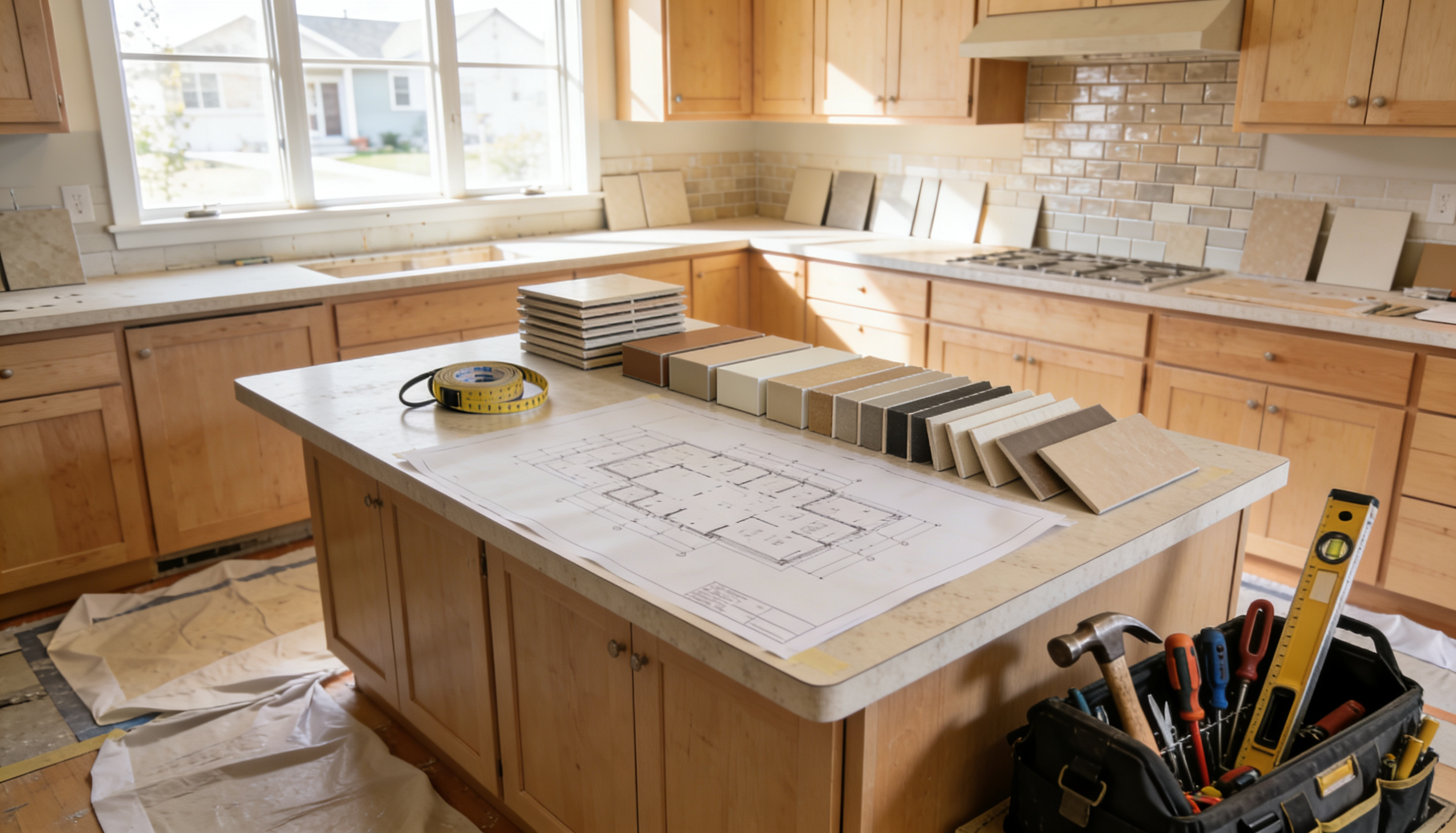
Tile serves as both the primary visual statement and the functional protective surface of any kitchen or bathroom renovation. For property owners across Huntingdon Valley, Elkins Park, and Willow Grove, the vast array of available tile formats, materials, and finishes can make selection overwhelming. While a high-gloss glazed ceramic tile may look stunning on a showroom display, installing that same tile on a high-traffic bathroom floor can create a severe slipping hazard. Choosing the right tile requires matching material properties—such as water absorption, slip resistance, and maintenance requirements—to the specific demands of each residential space.
Comparing Primary Tile Categories: Porcelain, Ceramic, and Natural Stone
Understanding the physical characteristics of tile categories helps homeowners make informed, lasting selections:
- Porcelain Tile: Crafted from dense, refined clay and fired at extreme temperatures, porcelain tile has a water absorption rate of less than 0.5 percent, making it virtually waterproof. It is exceptionally dense, resisting chips, scratches, and heavy impact. Advanced digital printing allows porcelain to replicate natural travertine, Calacatta marble, or rustic hardwood planks with remarkable realism, making it the premier choice for bathroom floors, walk-in shower walls, and busy kitchen floors.
- Ceramic Tile: Fired at lower temperatures than porcelain, ceramic tile is slightly softer and more porous. While not suitable for freezing outdoor applications or heavy commercial floor traffic, glazed ceramic tile offers brilliant color depth, unique dimensional glazes, and intricate geometric shapes. Its lighter weight and workability make it an economical, stylish option for decorative kitchen backsplashes and vertical bathroom accent walls.
- Natural Stone Tile: Genuine marble, limestone, slate, and basalt bring organic warmth, unique mineral veining, and timeless architectural luxury to suburban homes. However, natural stone is porous and chemically sensitive. It requires sealing prior to grouting and routine resealing throughout its lifespan to prevent staining from acidic liquids, cosmetics, and hard water.
- Mosaic Tile Sheets: Mounted on fiberglass mesh backing sheets, small mosaic tiles (measuring two inches or less) conform easily to sloped surfaces. The high density of surrounding grout lines provides natural slip resistance, making mosaics the industry standard for sloped walk-in shower floors.
Subfloor Preparation and Large-Format Tile Requirements
Modern remodeling trends heavily favor large-format tiles—defined as any tile with at least one edge exceeding fifteen inches, such as 12×24-inch or 24×48-inch planks. Large-format tiles create clean, expansive visual aesthetics by significantly reducing the number of visible grout lines. However, these large, rigid surfaces require a perfectly flat subfloor or wall substrate.
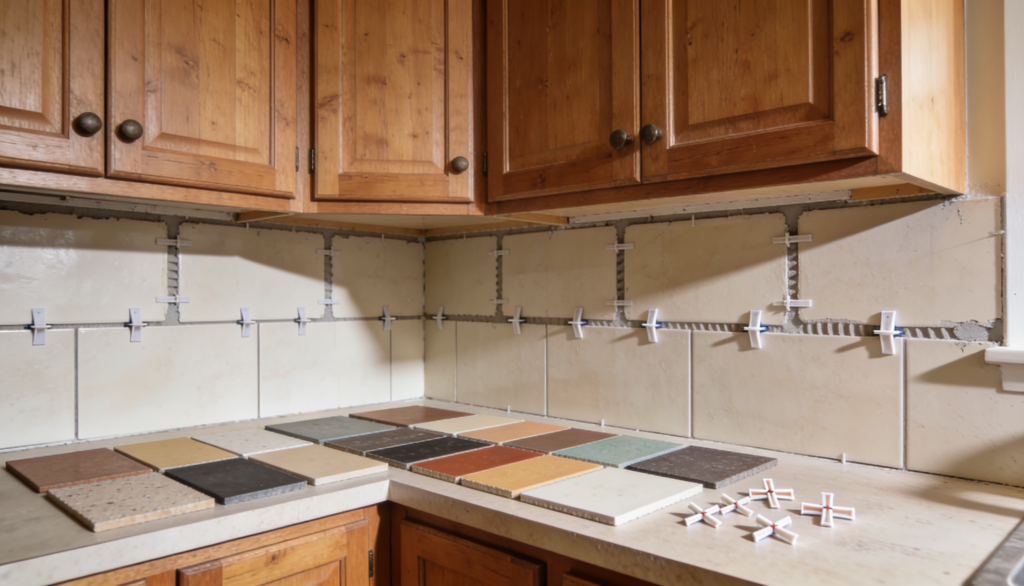
Installing large-format tile over an uneven subfloor results in “lippage,” an unsightly and hazardous condition where one tile edge protrudes higher than an adjacent tile. Following Tile Council of North America installation standards, your contractor must apply self-leveling underlayments, use medium-bed polymer-modified mortars, and employ mechanical tile-leveling clip systems during installation to ensure perfectly flat, shadow-free surfaces.
Grout Selection and Visual Pattern Alignment
Grout plays a critical role in both structural stability and visual design. Homeowners must choose between cement-based and epoxy grouts. Modern sanded and unsanded cement grouts are polymer-fortified for flexibility, but they require sealing to resist liquid staining. Conversely, high-performance epoxy and urethane grouts are impervious to water, chemical stains, and bacterial growth without ever requiring sealing, making them ideal for high-use kitchen backsplashes and wet shower enclosures.
The color relationship between your tile and grout dramatically alters the room’s visual proportions. Selecting a matching grout color creates a seamless, monolithic surface that expands small spaces. Choosing a contrasting grout—such as charcoal grout against white subway tile—emphasizes the geometric layout pattern, highlighting brick-bond, herringbone, or vertical stacked alignments.
Precision Trim Profiles and Room Transitions
A high-end tile installation is distinguished by how its edges and room transitions are finished. Exposed raw tile edges along shower walls or backsplash perimeters should never be left unfinished. Professional installers utilize matching ceramic bullnose trim pieces, mitered forty-five-degree outside corners, or sleek anodized aluminum and brushed brass edge profiles (such as Schluter strips) to protect tile edges from chipping and provide a crisp architectural line.
When transitioning from bathroom tile to adjacent bedroom hardwood or hallway carpeting, flush thresholds ensure safe, barrier-free movement across the home. By relying on an experienced team for professional tile installation in Huntingdon Valley, you ensure that complex layouts, substrate leveling, and waterproofing details are executed with flawless craftsmanship. Contact Huntingdon Valley Kitchen & Bath Remodelers today to review material samples and plan your complete bathroom remodeling or kitchen upgrade.
What is the difference between porcelain and ceramic tile for residential remodeling? Porcelain tile is denser, harder, and completely impervious to water absorption, making it ideal for high-traffic floors and wet walk-in showers. Ceramic tile is slightly softer and lighter, making it a cost-effective, highly decorative choice for kitchen backsplashes and vertical wall accents.
Can I install large-format tile on a small bathroom floor? Yes. Installing large-format tiles (such as 12×24 inches) in a small bathroom actually makes the room appear larger. Fewer visible grout lines create a clean, uncluttered surface that visually expands the floor dimensions.
Why do I need mosaic tile on my walk-in shower floor? Walk-in shower floors must be pitched toward the drain assembly. Small mosaic tiles (two inches or smaller) adapt easily to this slope without cracking, while the high number of surrounding grout lines provides essential traction and slip resistance on wet surfaces.
How do I choose between matching or contrasting grout colors? Matching grout color to your tile creates a continuous, monolithic look that makes spaces feel larger and cleaner. Contrasting grout highlights the geometric pattern and layout of the tile, adding bold architectural definition to subway tile backsplashes or feature walls.