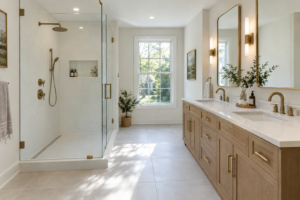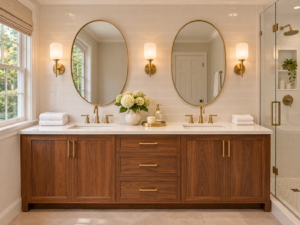
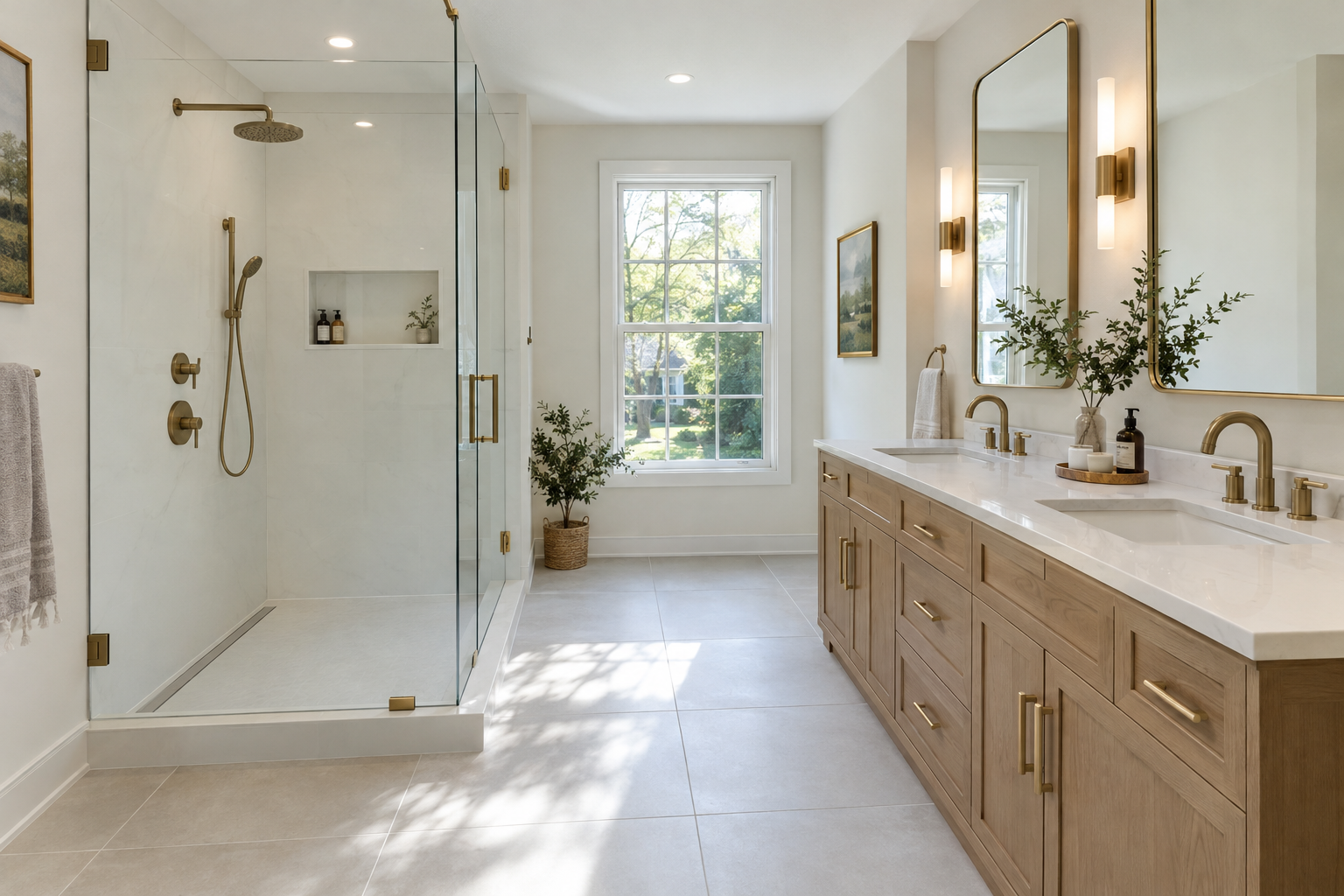
Homeowners across Huntingdon Valley, Abington and Jenkintown often ask us the same question: tile or panels? A solid surface shower uses large, non-porous panels instead of small tiles and grout. As a result, it offers a clean, modern look with much less upkeep.
One client told us the finished bathroom looked high-end but did not cost a fortune. That balance is exactly where solid surface walls shine. Still, tile remains the better choice in some bathrooms.
This guide compares both options so you can choose the right shower walls for your Montgomery County home.
What Is a Solid Surface Shower?
Solid surface panels are made from mineral fillers and resin. They are cut to size and installed in a few large pieces. Seams are tight and sealed with color-matched material.
- Non-porous surface. Water and soap scum stay on the surface instead of soaking in.
- Few or no grout lines. There is far less to scrub or reseal.
- Repairable. Light scratches can often be sanded out.
- Matching accessories. Niches, ledges and bench tops can be made from the same material.
Fewer joints also mean fewer places for moisture to hide. The EPA guide to mold and moisture notes that controlling moisture is the key to preventing mold indoors.
How a Solid Surface Shower Compares With Tile
Both options can look beautiful. However, they differ in maintenance, design freedom and installation.
- Cleaning: Panels wipe clean. Tile needs grout care and periodic sealing.
- Design: Tile offers endless patterns, textures and colors. Panels offer a calm, seamless look.
- Installation time: Panels usually go up faster once the walls are prepared.
- Repairs: A chipped tile can be replaced. A damaged panel may need refinishing or replacement.
What a Proper Solid Surface Shower Installation Includes
A good result depends on what happens behind the panels. For example, walls must be flat and waterproof before anything is attached.
- Flat, plumb backer board or a waterproof wall system.
- Accurate cutouts for valves, niches and grab bars.
- Sealed corner seams with color-matched adhesive.
- A properly sloped shower pan or base.
- Clear glass mounting points with solid blocking.
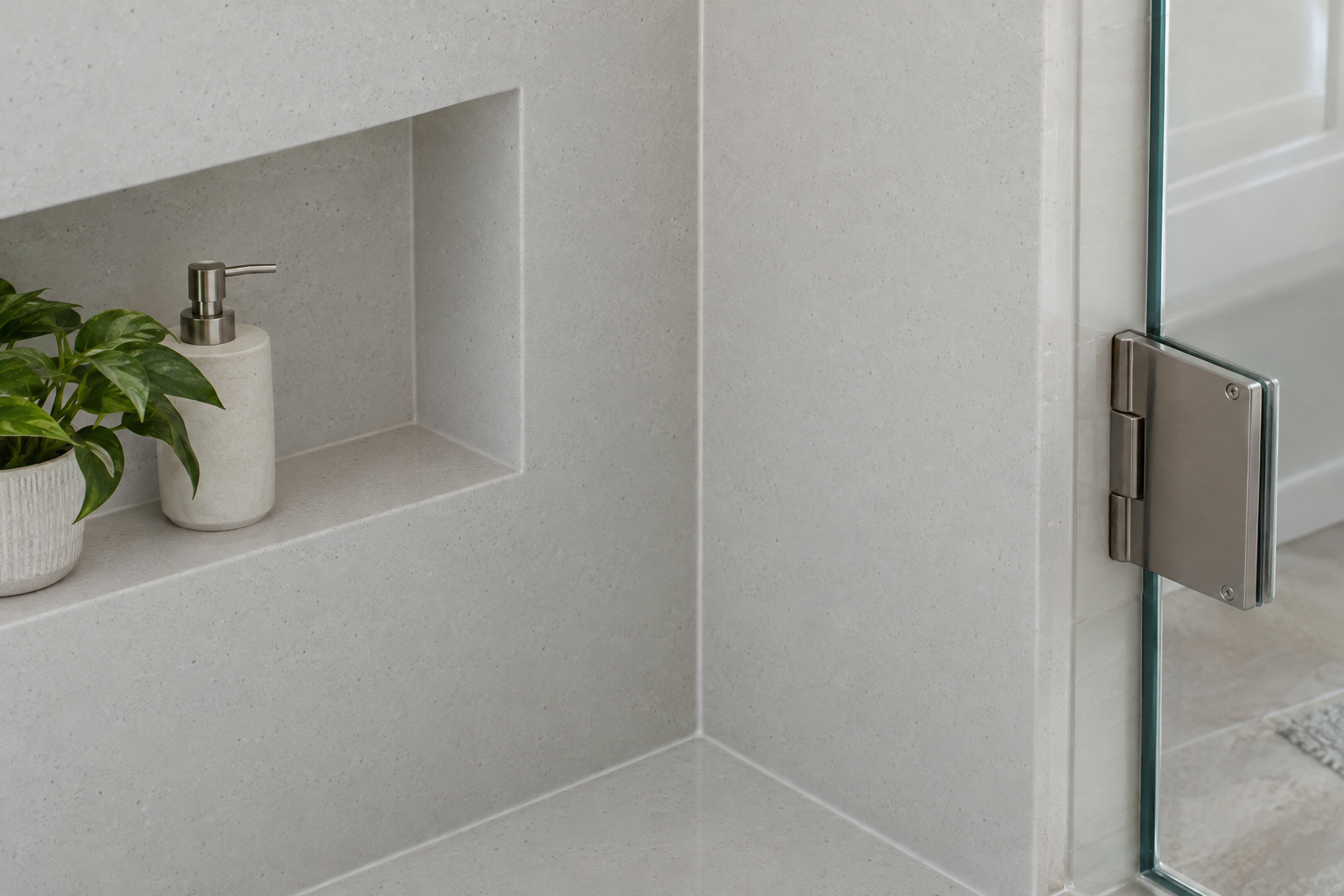
Careful seam work is what makes the finished shower look truly custom.
Solid Surface vs. Tile: Making the Right Call
A solid surface shower makes sense when:
- You want the easiest possible cleaning.
- You prefer a clean, modern look.
- The bathroom is a busy family or guest bath.
Tile makes sense when:
- You want a specific pattern, mosaic or natural stone look.
- The design calls for a curbless floor tiled continuously into the shower.
- Matching existing tile elsewhere in the house matters.
Signs Your Current Shower Walls Need Replacing
- Grout that stays dark even after cleaning.
- Loose or hollow-sounding tiles.
- Caulk that peels away within months.
- Paint bubbling on the wall outside the shower.
These problems often point to water behind the wall. Therefore, a remodel should start with a full inspection of the backer and framing.
Frequently Asked Questions
Is a solid surface shower more expensive than tile? Costs vary by material and design. Panels often save labor time, while tile can be less expensive for simple layouts. We price both options so you can compare.
Can solid surface panels go over existing tile? We do not recommend it. Removing old tile lets us check for hidden water damage and build a flat, waterproof wall.
Will a solid surface shower look cheap? Not when it is designed well. Matte finishes, stone-look patterns and frameless glass create a high-end look.
How do I clean solid surface shower walls? A soft cloth and mild cleaner are usually enough. Avoid harsh abrasive pads.
Plan Your Shower Remodel in Huntingdon Valley
Whether you choose a solid surface shower or classic tile, the result depends on careful planning and installation. Huntingdon Valley Kitchen & Bath Remodelers helps you compare options and handles the full remodel. Explore our bathroom remodeling services, see our project portfolio, or contact our team to start planning.