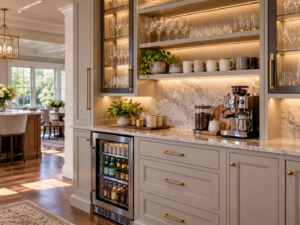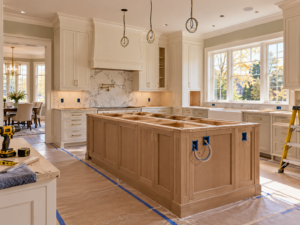
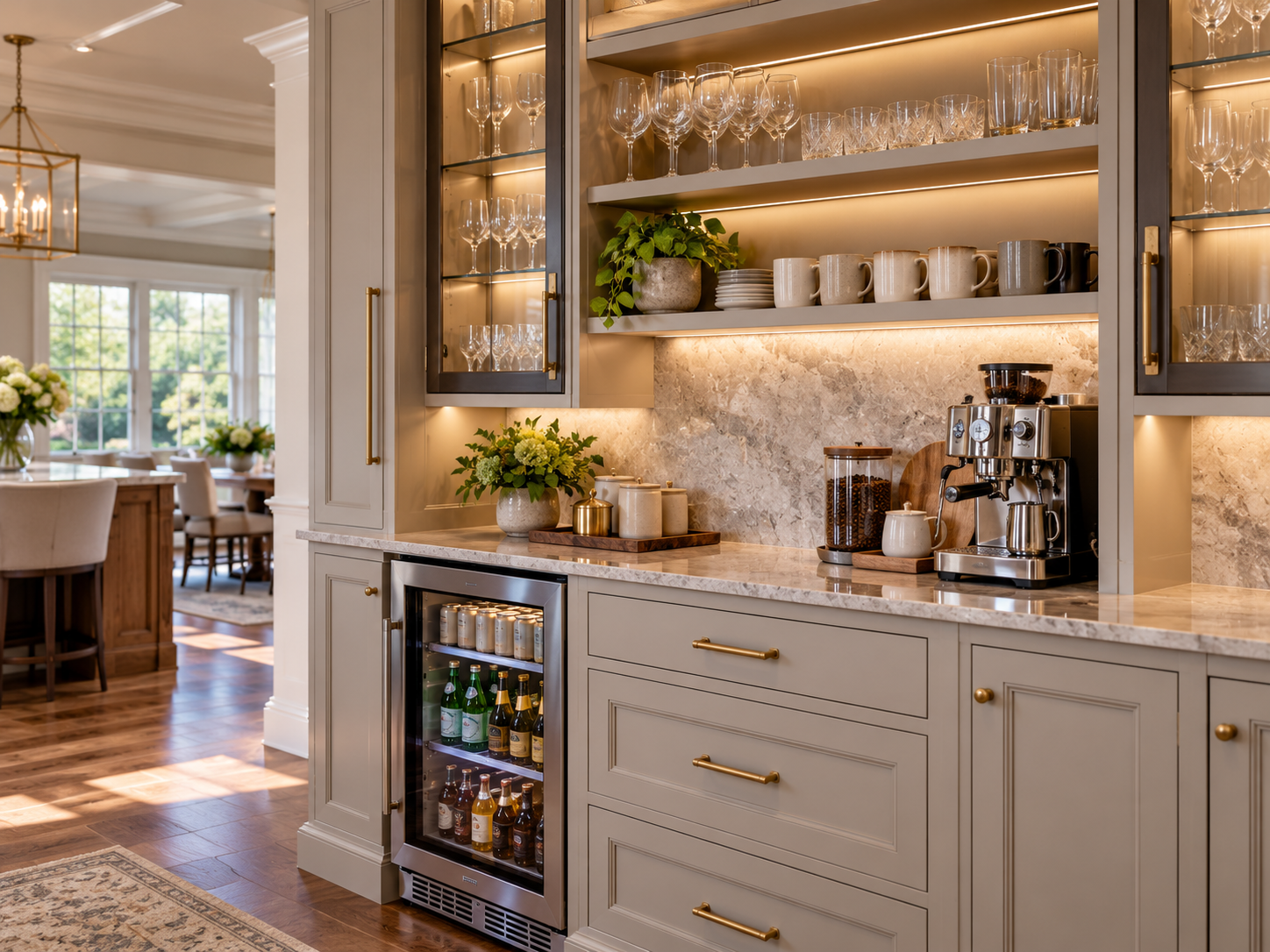
A dedicated beverage station can remove a surprising amount of traffic from the main kitchen work zone.
Instead of having coffee makers, glasses, wine bottles, water dispensers, and small appliances scattered across the primary counter-tops, a carefully planned beverage area gives those activities their own location.
In larger Huntingdon Valley and Montgomery County kitchens, the concept can range from a simple dry coffee bar to a complete beverage center with refrigeration, a sink, storage, lighting, and specialty appliances.
The key is to design the station around how the family actually uses it.
Start With the Daily Routine
Before selecting cabinetry, decide what the station needs to support.
A morning coffee station has different requirements than an entertaining bar.
Coffee preparation may need countertop space, outlets, mugs, filters, coffee storage, and convenient access to water.
An entertaining center may require wine or beverage refrigeration, glass storage, serving space, and perhaps a sink.
Trying to design one area for every imaginable appliance can result in clutter rather than convenience.
Huntingdon Valley Kitchen & Bath Re-modelers offers custom kitchen remodeling services that can integrate these specialized zones into the overall cabinetry and layout.
Dry Station or Wet Station?
A dry beverage station does not contain a sink.
That often makes it easier to place because the design does not need to route water supply and drainage to a new location.
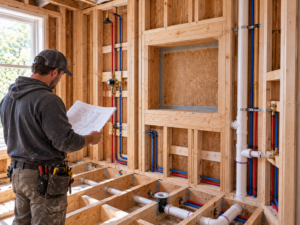
A wet station can be very convenient but adds plumbing considerations.
The proposed sink location must work with the structure, drainage route, venting strategy, cabinetry, and applicable plumbing requirements.
Those conditions should be evaluated before cabinets are ordered.
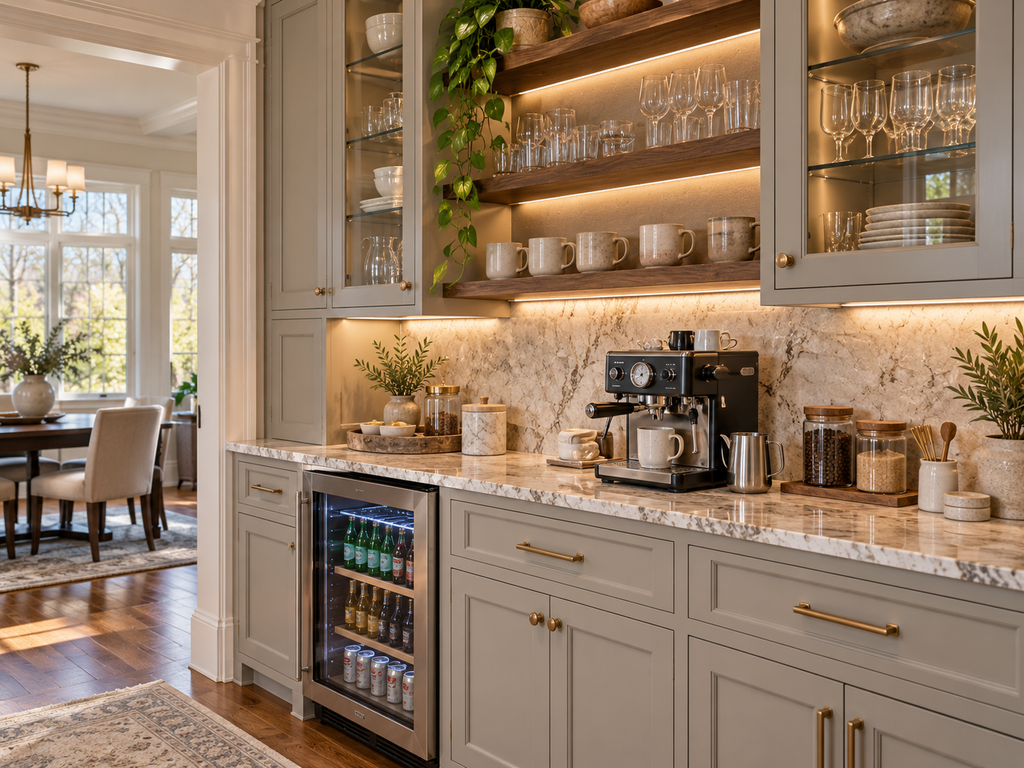
Coordinate Refrigeration Early
Under-counter wine coolers and beverage refrigerators are popular additions, but they should not simply be pushed into any open cabinet space.
The exact appliance model determines opening width, depth, ventilation needs, electrical requirements, door swing, and required clearances.
Some appliances are designed for built-in installation; others need more ventilation around them.
Always design the cabinet opening around the selected manufacturer’s specifications.
Do Not Underestimate Electrical Needs
A beverage center can contain several electrically powered items in a small area.
Coffee makers, espresso machines, kettles, blenders, refrigeration, and decorative lighting may all compete for power.
Electrical planning should occur before cabinetry and backsplash installation so receptacle locations are both practical and code-compliant.
The goal is to avoid an expensive remodeled beverage station that immediately needs extension cords or visible power strips.
Storage Makes the Station Work
The best beverage centers hide the clutter that usually accumulates around them.
Shallow drawers can organize coffee pods, tea, corkscrews, napkins, and accessories. Upper cabinets can hold mugs and glassware. Deep drawers can store bottles or serving pieces.
An appliance garage can conceal frequently used countertop equipment, but ventilation, heat, and manufacturer requirements must be considered before enclosing appliances.
Countertop and Backsplash Choices Matter
A beverage station is a working surface.
Coffee, wine, citrus, water, and other liquids can stain or damage materials that are poorly suited to the use.
Countertop selection should balance appearance with maintenance.
The backsplash is also an opportunity to differentiate the station visually from the main kitchen while keeping it connected to the overall design.
Position It Outside the Main Cooking Zone
One of the biggest advantages of a beverage center is separating casual traffic from cooking.
Guests should ideally be able to make a drink without standing directly in front of the range, prep sink, or main refrigerator.
In a large suburban kitchen, a beverage station near the family room, breakfast area, dining room, or secondary circulation route can work especially well.
NKBA offers additional professional kitchen planning information through the National Kitchen & Bath Association.
FAQ
Does a beverage station need a sink?
No. Many successful beverage areas are dry stations with cabinetry, countertop space, outlets, and refrigeration.
Can I add an undercounter refrigerator to any cabinet?
The opening must be designed for the exact appliance and its ventilation and clearance requirements.
When should the beverage station be planned?
During the initial kitchen layout phase, before cabinetry, electrical, plumbing, and counter-tops are finalized.
Is a coffee bar worth including in a kitchen remodel?
For households that use the equipment daily, separating beverage preparation from the main cooking area can improve organization and workflow.
A custom beverage station should look like part of the kitchen—not an afterthought. Huntingdon Valley Kitchen & Bath Re-modelers can integrate cabinetry, appliances, finishes, and utilities into one coordinated design.