Cabinetry occupies the largest visual footprint in your kitchen. Beyond dictating the room’s overall aesthetic, the cabinets endure constant physical interaction—grease, moisture, heat, and daily wear and tear. For homeowners in Jenkintown and Bryn Athyn investing in a complete kitchen overhaul, choosing the right finish for your custom cabinetry is as important as selecting the wood species itself. The debate typically centers on two distinct paths: a rich, natural wood stain or a crisp, durable painted finish.
The Appeal of Natural Stained Wood
Stained wood brings warmth, texture, and organic variation into the kitchen. Stains penetrate the wood fibers, highlighting the natural grain patterns rather than covering them up.
Choosing the Right Species
If you prefer a stained finish, the wood species dictates the final appearance. Cherry wood provides a smooth, elegant grain that naturally deepens and reddens over time with exposure to UV light. Maple offers a lighter, subtler grain pattern perfect for modern, airy designs. Quarter-sawn white oak is highly sought after for its durability and distinctive “ray flake” patterns, fitting beautifully into both historic and contemporary homes.
Durability of Stained Finishes
Stained cabinets are highly forgiving. Minor scratches or dents blend into the natural variations of the wood grain, making them an excellent choice for busy households. A high-quality clear topcoat protects the stain from moisture and heavy impacts.
The Precision of Painted Cabinetry
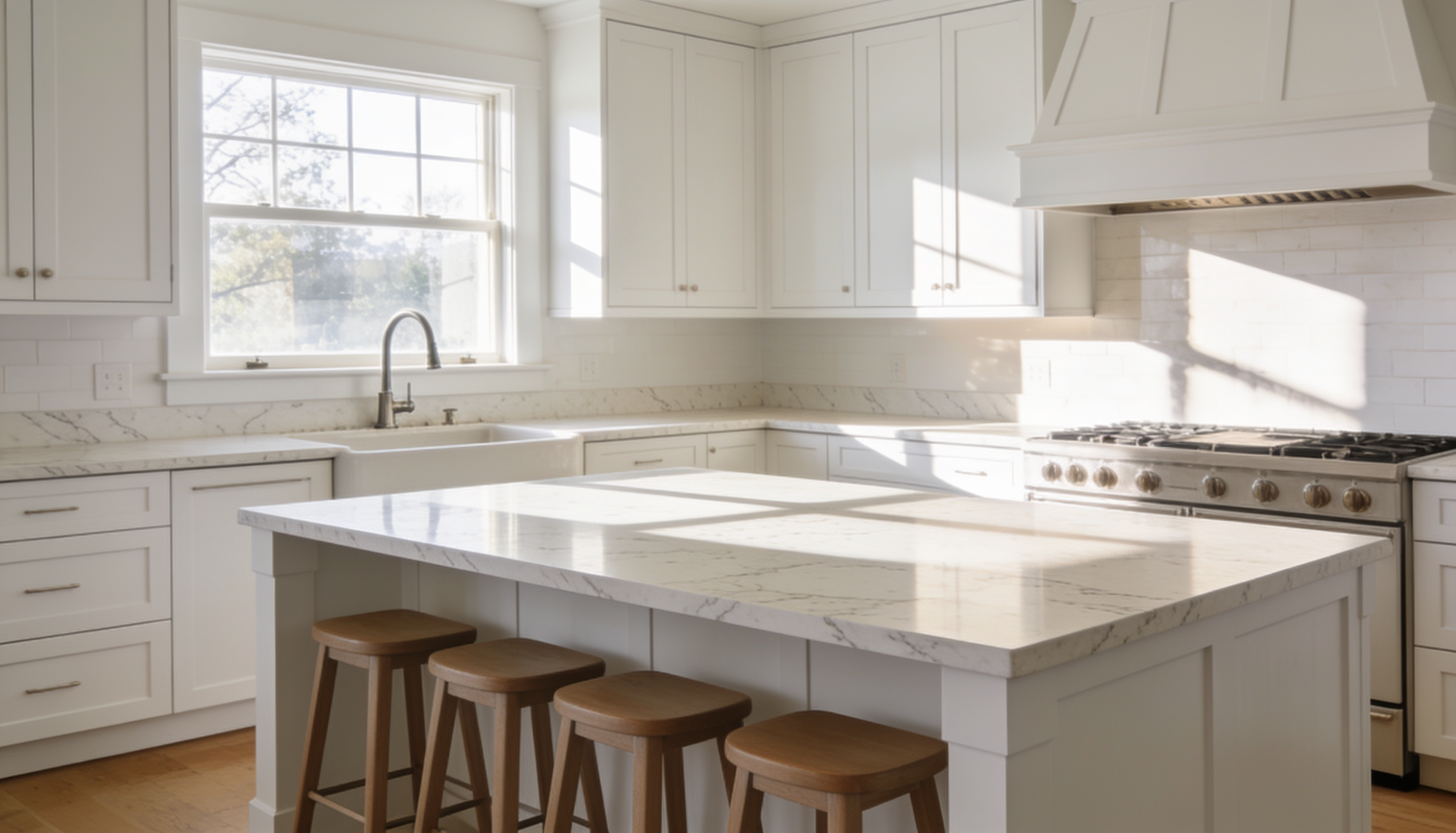
Painted cabinetry offers ultimate color control, allowing homeowners to achieve crisp whites, deep navy blues, or rich forest greens that define modern kitchen aesthetics.
Factory Finish vs. On-Site Painting
The durability of a painted cabinet relies entirely on how the paint is applied. A professional factory finish (or shop finish) is applied in a controlled, dust-free environment. The wood is primed, coated, and often baked in an oven to catalyze the finish, creating a hard, enamel-like shell. According to standards outlined by the Kitchen Cabinet Manufacturers Association (KCMA), a proper catalyzed finish resists yellowing, moisture absorption, and chipping under heavy use.
Conversely, cabinets painted on-site with standard house paint are highly susceptible to chipping, brush strokes, and peeling around the hardware over time. For high-end custom cabinetry, a catalyzed shop finish is mandatory for long-term performance.
Combining Finishes: The Two-Tone Approach
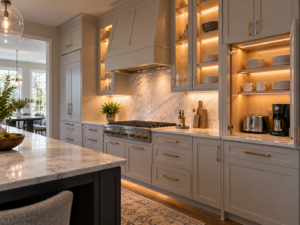
Homeowners do not have to choose just one finish. The two-tone kitchen design remains highly effective for balancing aesthetics. A popular approach involves using a crisp, painted finish for the perimeter wall cabinets to reflect light and keep the room feeling spacious, while utilizing a rich, stained wood for the central island. This anchors the room visually and adds a layer of organic texture that prevents the kitchen from feeling overly clinical.
Finalizing Your Cabinetry Design
The finish you select directly impacts the lighting, maintenance, and longevity of your new kitchen. Whether you desire the timeless warmth of natural oak or the sleek perfection of a painted enamel, working with an expert kitchen remodeler ensures the final product is built to endure. Contact Huntingdon Valley Kitchen & Bath Remodelers to explore custom cabinetry finishes perfectly suited to your Jenkintown home.
FAQs:
- Will painted cabinets chip easily? If they are painted with a professional, catalyzed factory finish, they are highly resistant to chipping. However, cabinets painted on-site with standard latex wall paint will eventually peel and chip around the handles.
- Does wood grain show through painted cabinets? It depends on the wood species used. Paint applied to maple or MDF will look perfectly smooth, whereas paint applied to oak will show the heavy texture of the grain beneath the color.
- Are stained cabinets easier to keep clean than painted cabinets? Stained wood is highly forgiving; it hides smudges, dust, and minor scratches much better than a solid painted surface, particularly dark painted colors which show dust readily.