Countertop selection is easier when the homeowner compares how the material behaves, not only how the slab looks under showroom lighting. Quartz, quartzite, and granite bring different maintenance and fabrication considerations.
Why This Decision Belongs in Preconstruction
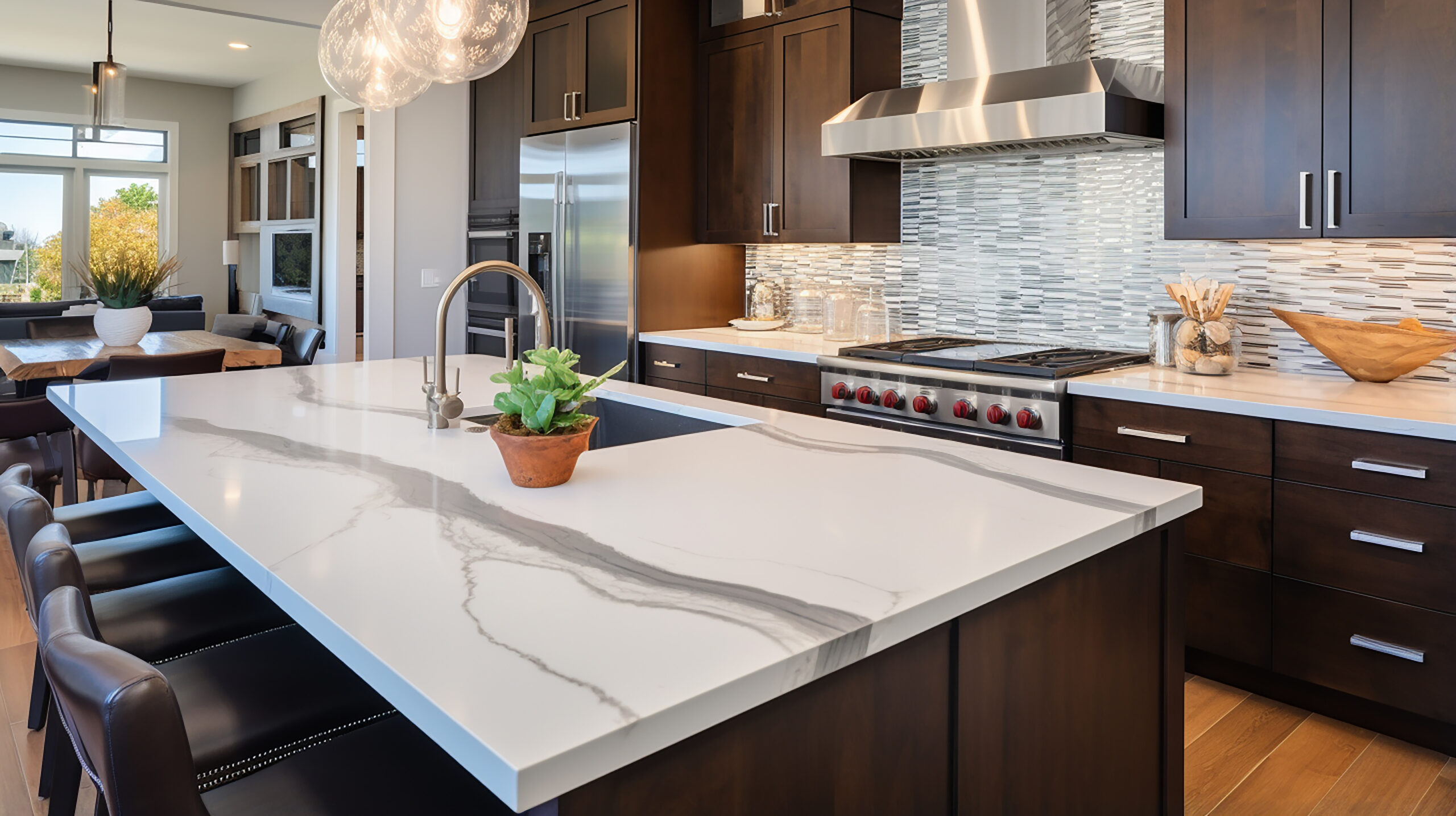
Jenkintown and Elkins Park kitchens may include large islands and long perimeter runs that make slab size, seam placement, and veining especially visible.
What Local Properties Change
Compare heat tolerance, staining, sealing needs, pattern consistency, edge profile, sink and cooktop cutouts, overhangs, and the household’s maintenance expectations before selecting a material.
What to Verify Before Work Starts
Engineered quartz contains resin, while quartzite and granite are natural stones with varying mineral composition and porosity. Specific slab characteristics and fabricator guidance matter more than broad labels.
How the Finished Work Should Perform
Plan seams and slab orientation before fabrication. A countertop should fit cooking habits, cleaning routines, cabinet geometry, and visual priorities as well as the design palette.
Frequently Asked Questions
Is quartzite the same as quartz?
No. Quartzite is natural stone; engineered quartz is manufactured from mineral content and binders.
Can seams be invisible?
They can be discreet, but they remain joints; material pattern, color, placement, and fabrication affect visibility.
Which materials need sealing?
Natural-stone care varies by material and finish, so the fabricator should provide recommendations for the selected slab.
Plan the Next Step
Huntingdon Valley Kitchen & Bath Remodelers can coordinate cabinetry, slab selection, seam planning, sinks, backsplashes, and installation details.
Helpful source: U.S. Department of Energy – Home Upgrades